
A toddler who points at an m and says "em" has done something clever. But when children learn to read, they blend sounds: "mmm-a-t", not "em-ay-tee". That's why I teach the sounds first and leave letter names for later.
Sounds first, names later
The letter name and the letter sound are different things. "Ess" is the name; "sss" is the sound. For reading, the sound is the one that matters. Letter names can come later, often through the alphabet song.
When you say a sound, keep it short and clean. Say "sss", not "suh". Say "mmm", not "muh".
Why s, a, t, p, i, n?
The NSW Department of Education has a suggested order for teaching letters and sounds from Kindergarten to Year 2, and it starts with s, a, t, p, i and n. Schools can adapt it, but many follow it closely. Those six letters are enough to make real words: sat, pin, tap, nap, ant, pat, sip. Your child can start blending sounds into words after just a handful of letters.
How to teach letters and sounds at home
- One letter at a time. Spend a few days on s before adding a.
- Say the sound and trace it. Trace the letter with your finger, starting at the top, while you say the sound.
- Find things that start with it. Spoon, sock and sun for s. Apple and ant for a.
- Play I spy with sounds. "I spy something that starts with sss."
- Blend early. Once you have a few letters, push them together slowly: "sss-a-t... sat!"
For very little ones, aged 1 to 2, just name the photo and say the sound. Tracing and blending can wait until they're older.
Using the posters
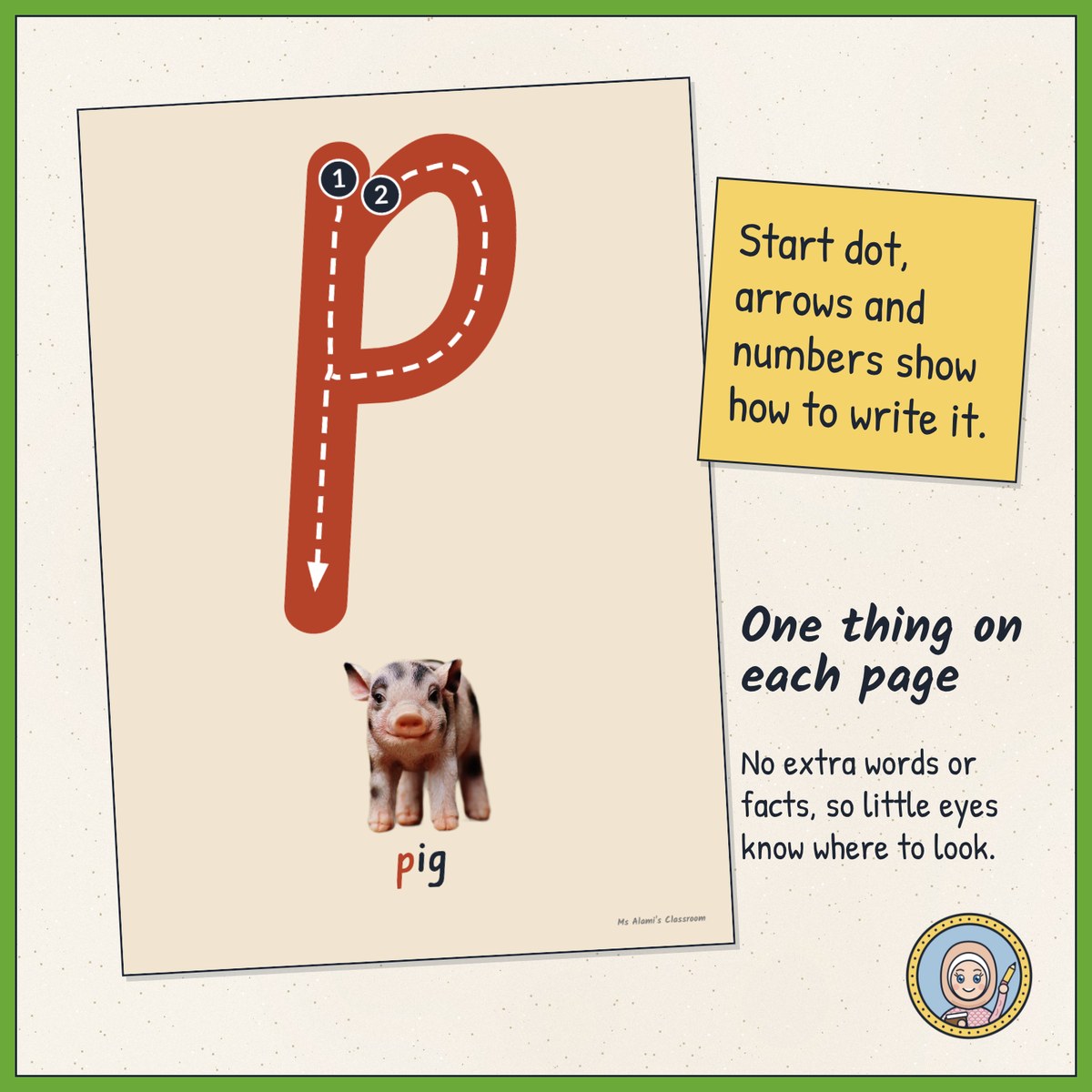
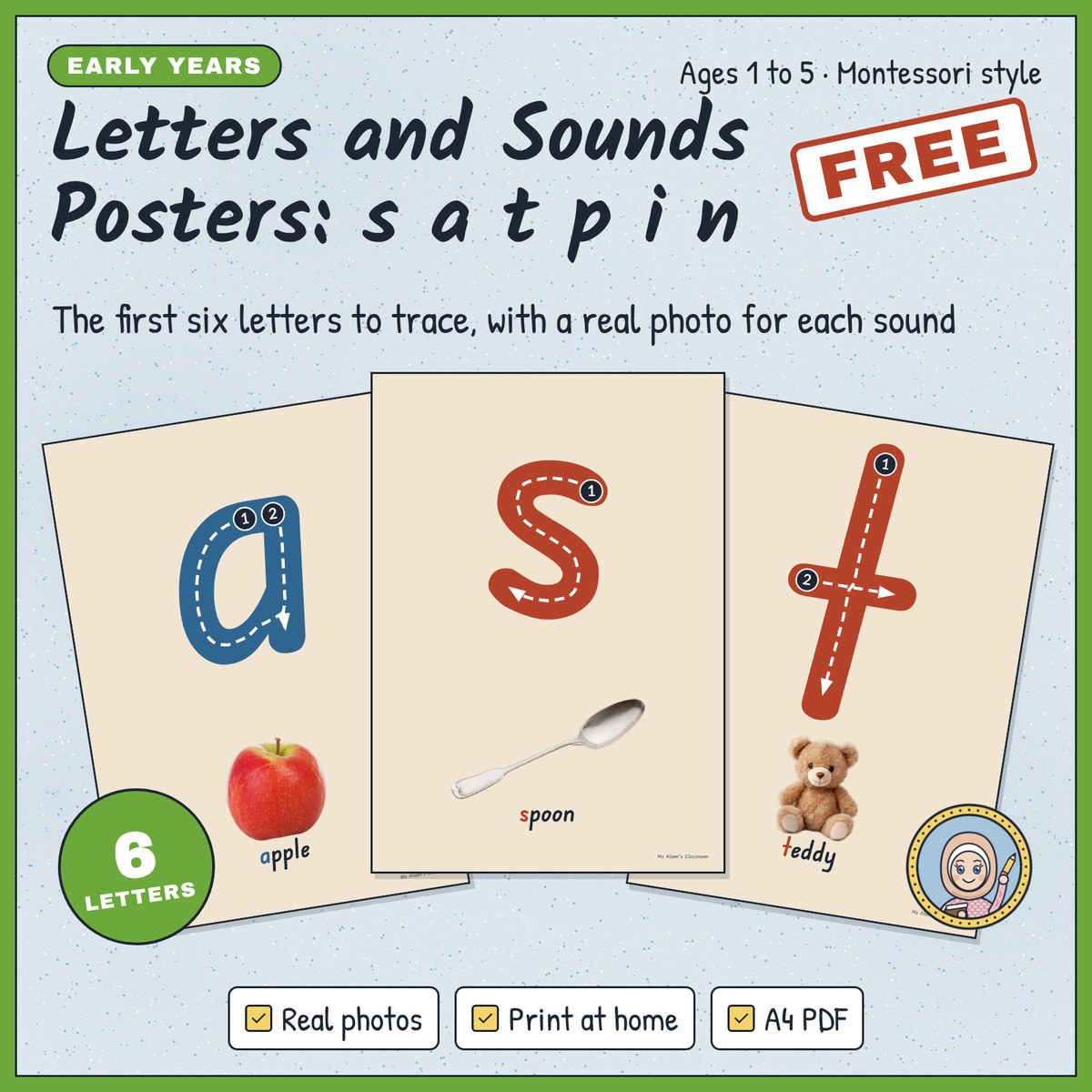
The free Letters and Sounds Posters cover s, a, t, p, i and n. Each one has a big lowercase letter with a start dot, arrows and numbered strokes to trace, and a real photo and its word. Vowels are blue and consonants are red, like Montessori sandpaper letters.
The full Letters and Sounds Posters set has all 26 letters in the NSW phonics order, with two versions of every poster: one plain and one on ruled lines, so your child sees where the letter sits. There's also an "All the letters" page and a page for parents with six short steps and ideas for ages 1 to 2, 2 to 3 and 3 to 5. The letters use the free Edu NSW ACT Foundation font, which follows the NSW school handwriting style.
Resources that go with this post
- FREE Letters and Sounds Posters: s a t p i n: the first six letters to trace, enough to make first words.
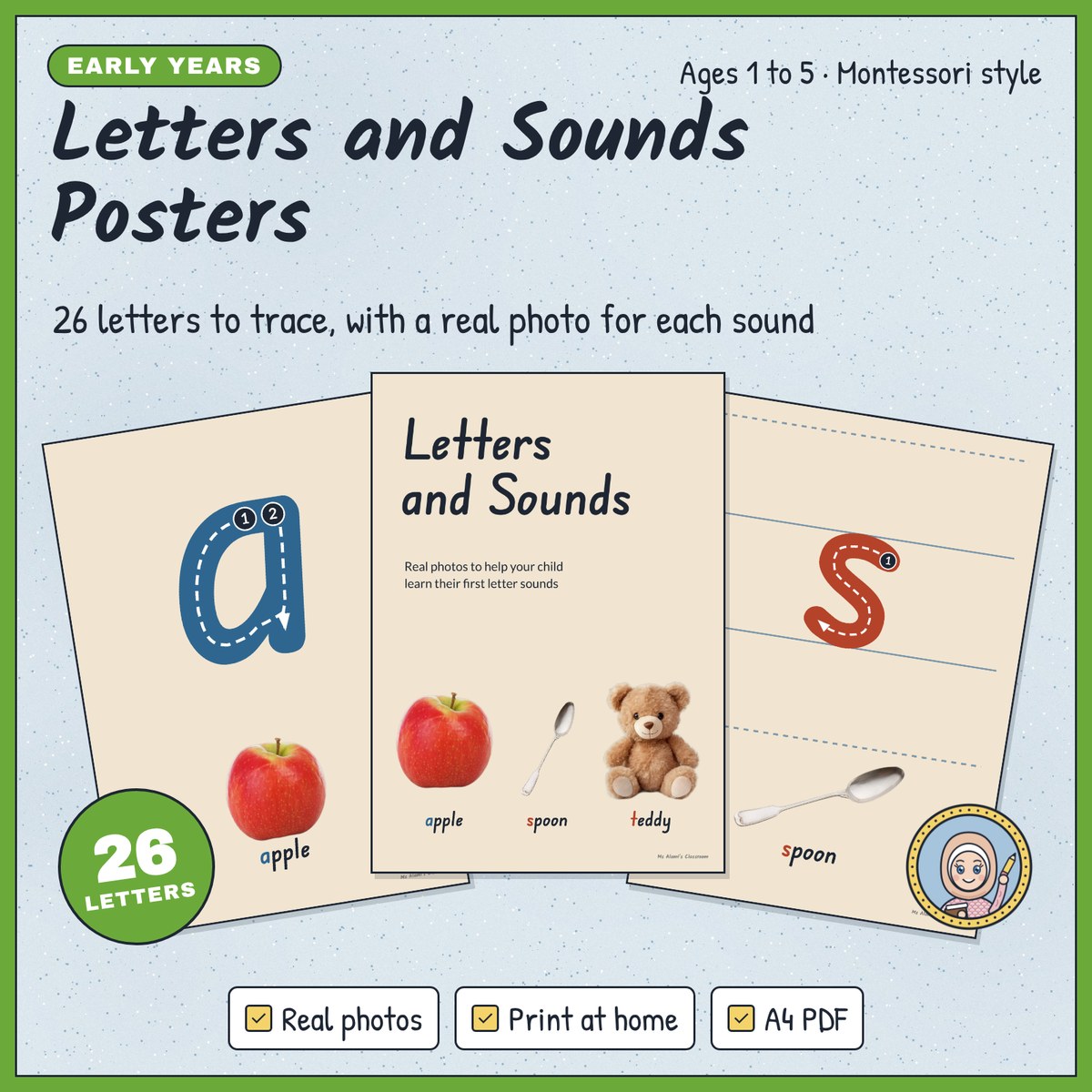
- Letters and Sounds Posters: all 26 letters, plain and ruled lines, with pages for parents.
More posts for little learners at home: Space, Colours, Counting and Shapes.