
Skip to content

Chance and probability activities for Years 5–6

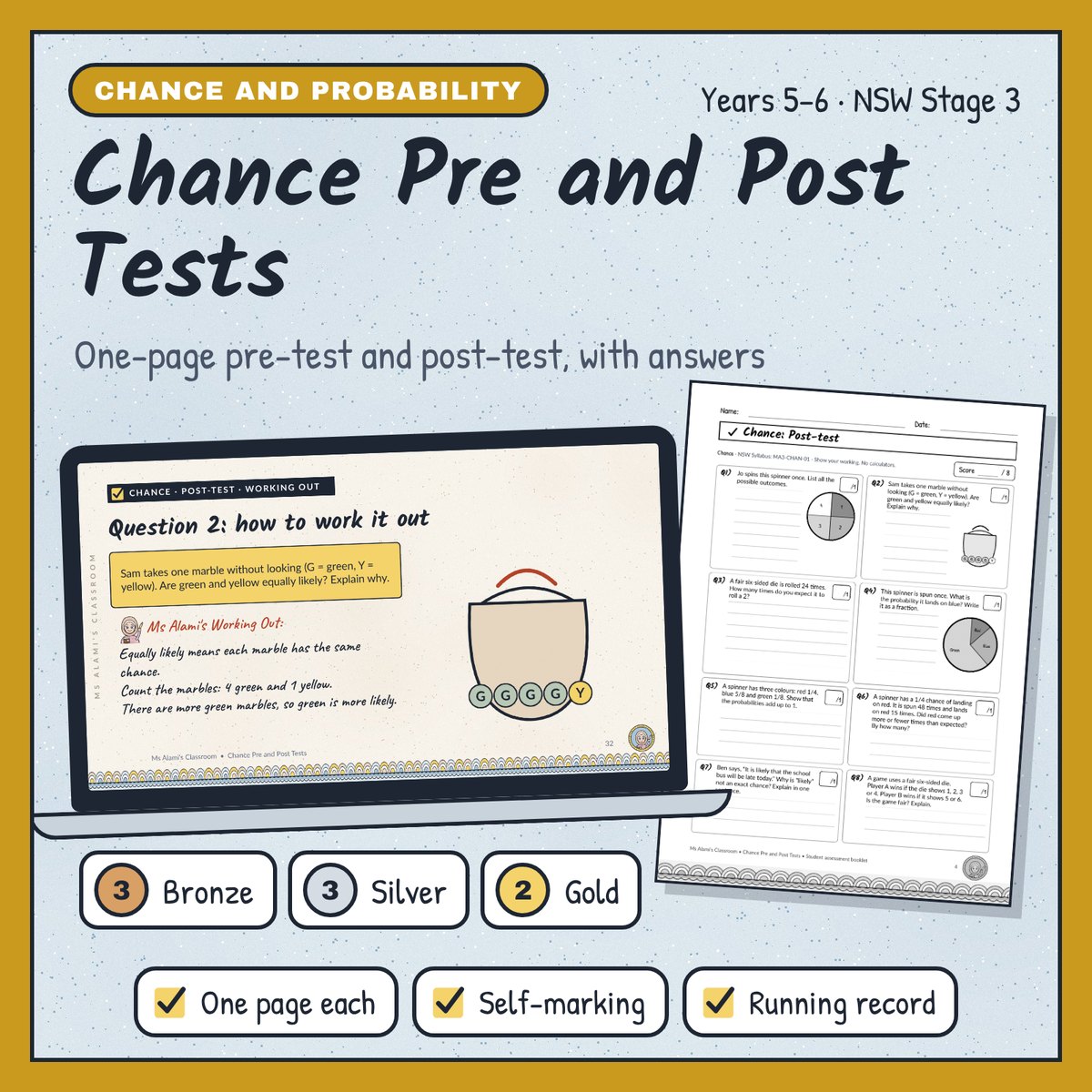
Probability gets abstract fast. Students guess instead of reasoning, and mix up what should happen with what actually happened in an experiment.

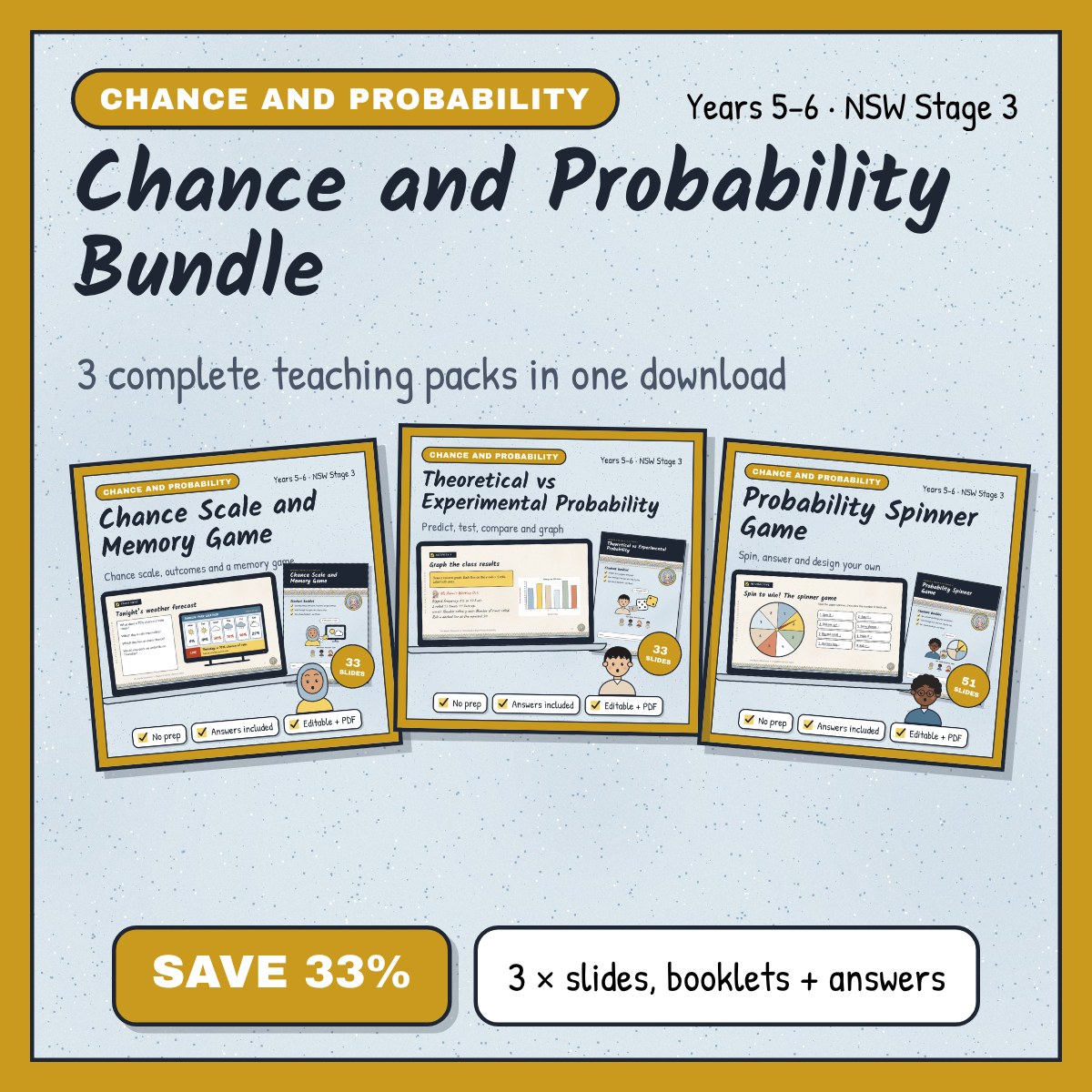
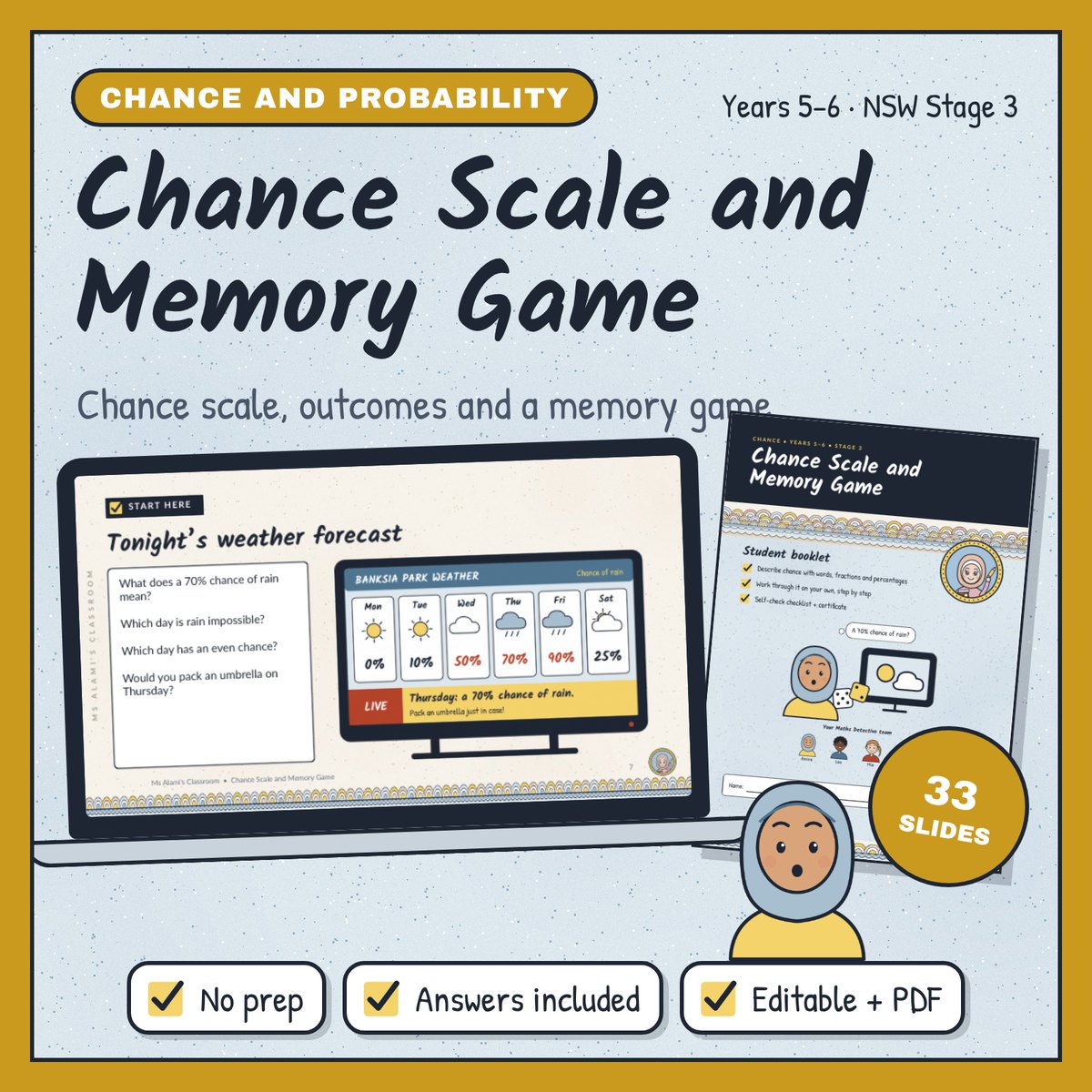
Games and experiments make it concrete: placing events on the chance scale, a chance memory game, a probability spinner game, and comparing theoretical with experimental probability using fractions, decimals and percentages.

Chance and Probability

The chance scale, experiments and spinner games

NSW Stage 3 · MA3-CHAN-01

Chance and Probability resources for Years 5–6

Search and filter in the shop

How to teach chance and probability

Free teaching guides with examples, common mistakes and lesson ideas.

Questions teachers ask

What is the chance scale?

A line from impossible (0) to certain (1), with unlikely, even chance and likely in between. Students place everyday events on it, then label it with fractions, decimals and percentages.

How do you teach theoretical vs experimental probability?

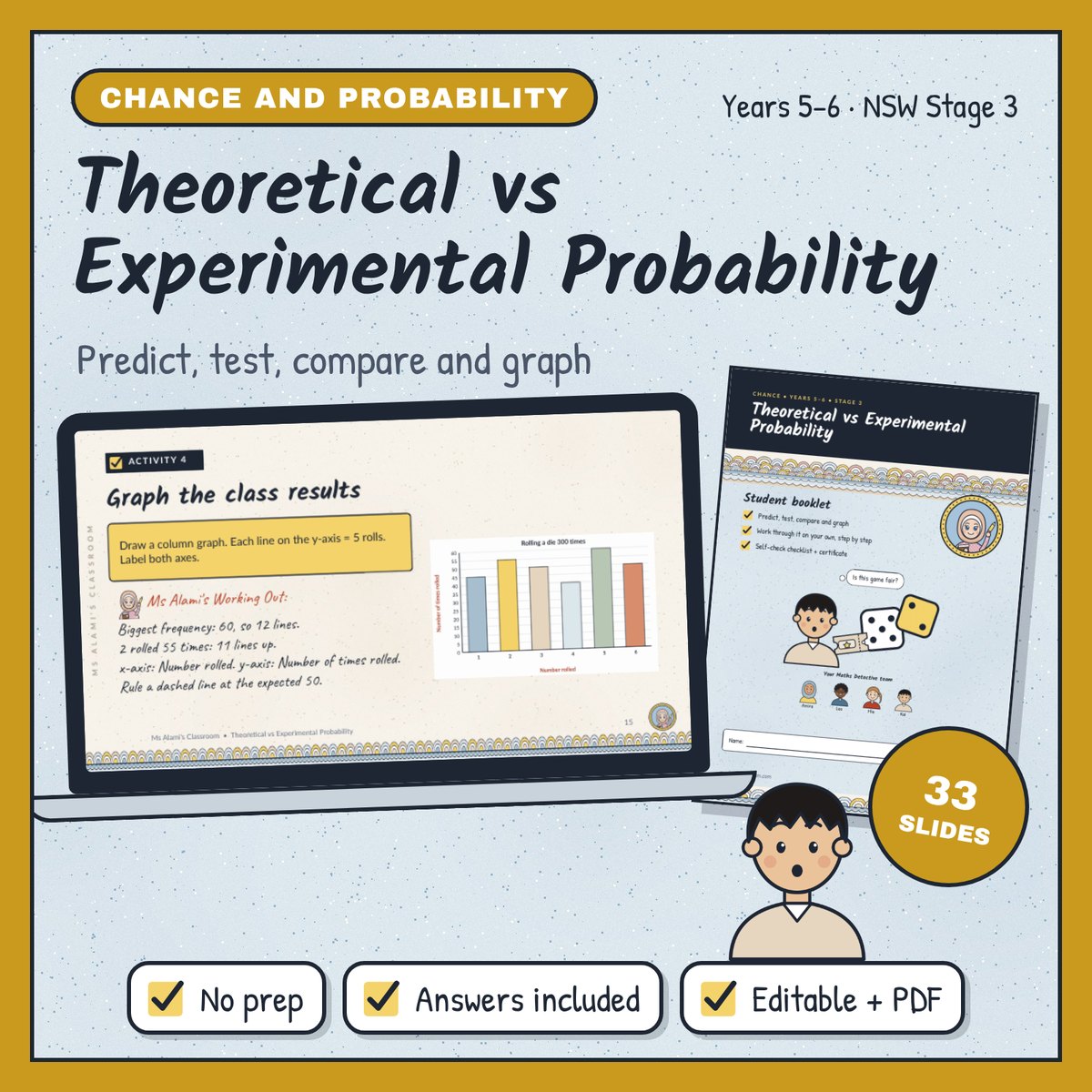
Students predict the result as a fraction (theoretical), run the experiment many times (experimental) and compare. The more trials they run, the closer the results usually get to the prediction.

What are good probability games for Year 6?

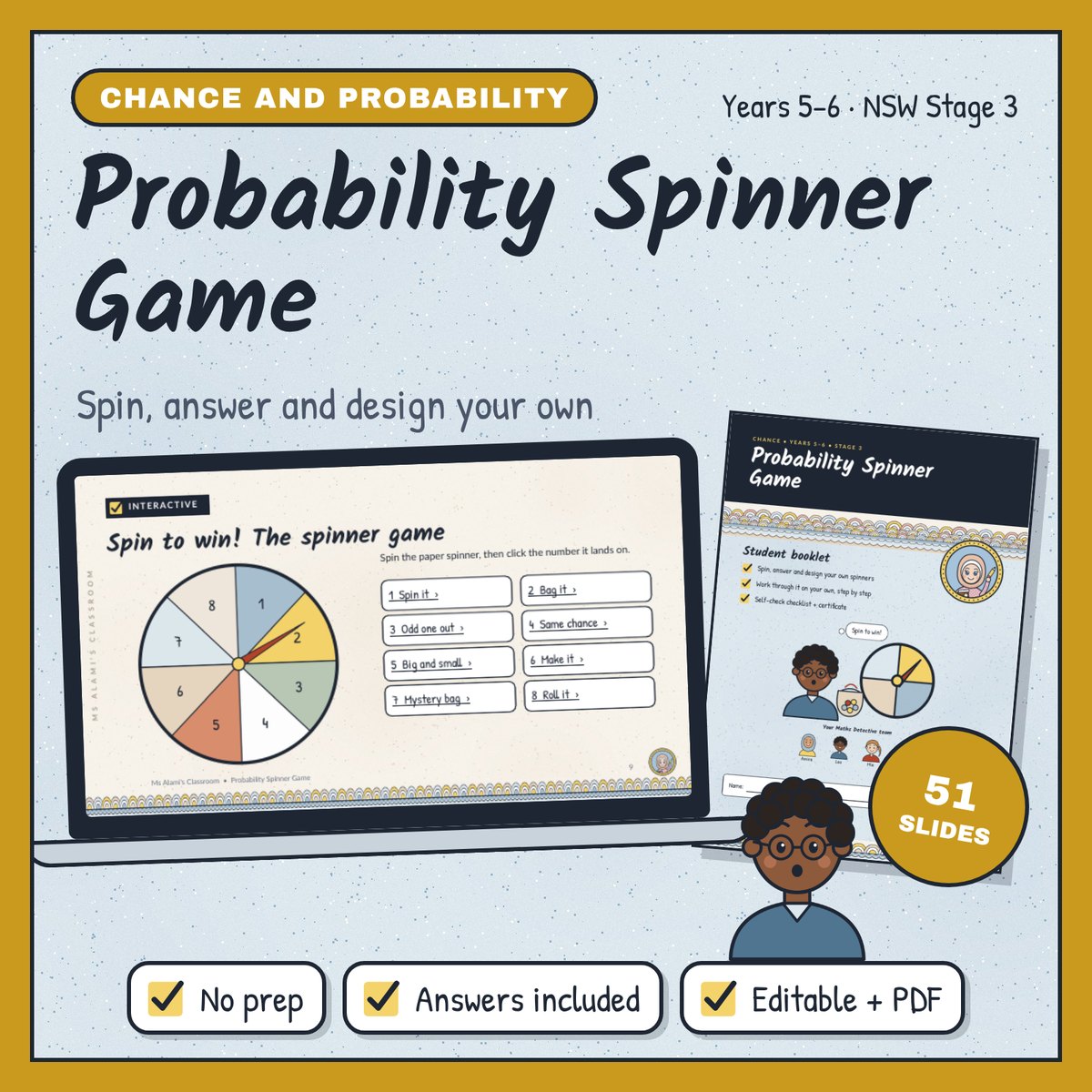
Spinner games and dice or coin experiments work well because students record real results. The chance and probability bundle includes a spinner game and a memory game.

More Years 5–6 maths topics