4 preview pages
Predict, test, compare and graph
$5.00
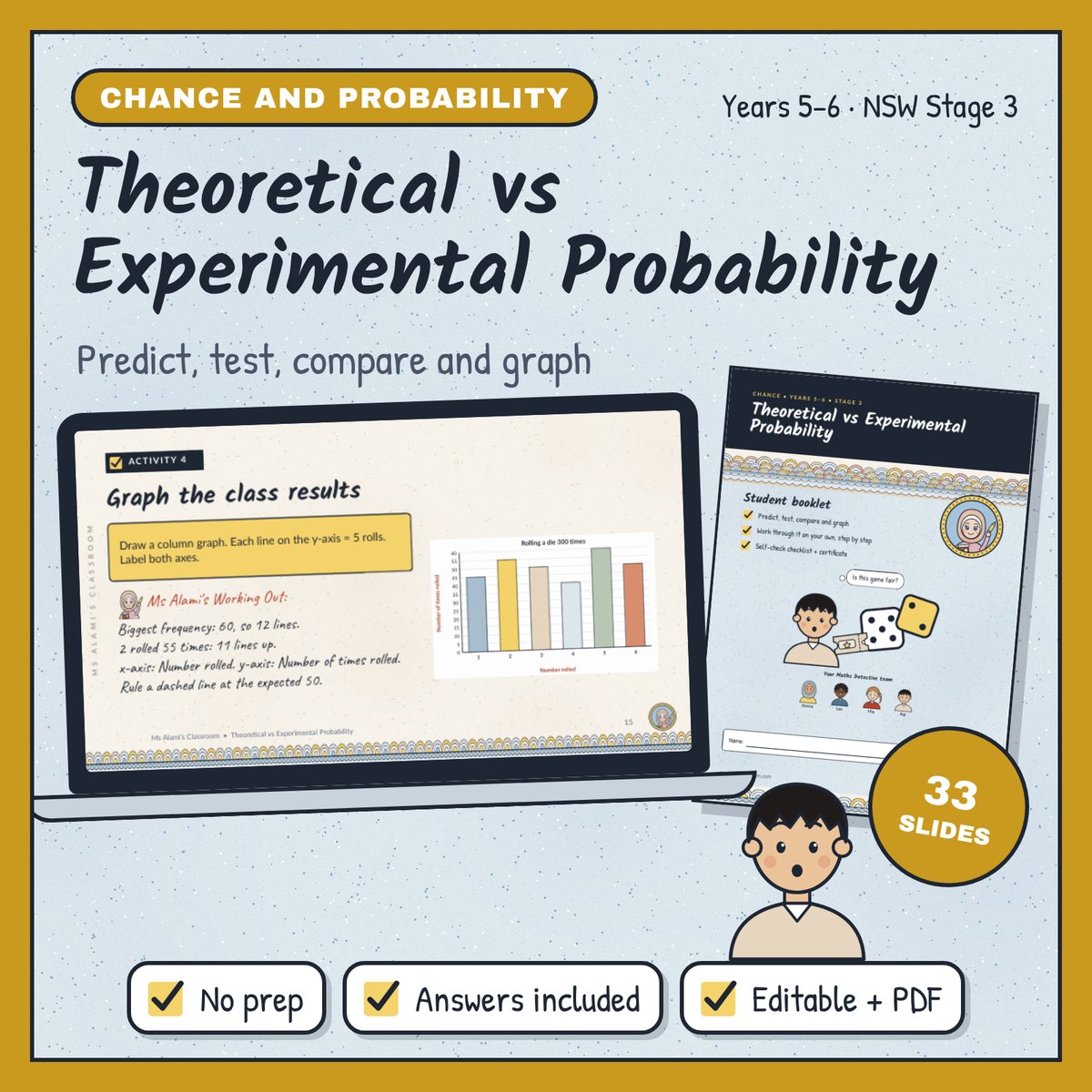
If you roll a die 30 times, should you get exactly five 6s? Most students say yes. Then they roll, and hardly anyone does. This investigation is set at a school fete game stall ("Roll a six, win a prize") with a die, coins and spinners.
Three lessons of 45–60 minutes. Start with expected and observed results and expected frequency, like 1/6 of 30 = 5. Pairs predict, roll and tally. Pool the results (the sample data has 300 rolls) and draw a column graph with 1 line = 5 rolls. Class totals usually sit closer to the expected numbers than any one pair's, which leads into small and large numbers of trials.
Students look at simulator results from 10 to 10,000 flips and spin an unequal spinner. They judge whether games are fair, solve the Case of the Trick Die and decide whether the fete game is worth $1 when the player wins on 1 outcome and the stall on the other 5.
No reviews yet. Bought this resource? You can leave a review from your download page.
Years 5-6, Mathematics
$10.00
Years 5-6, Mathematics
$5.00
Years 5-6, Mathematics
$5.00