Skip to content

Volume and capacity activities for Years 5–6

Students mix up volume and capacity, count cubes one by one instead of using length × width × height, and forget how cubic centimetres connect to millilitres.

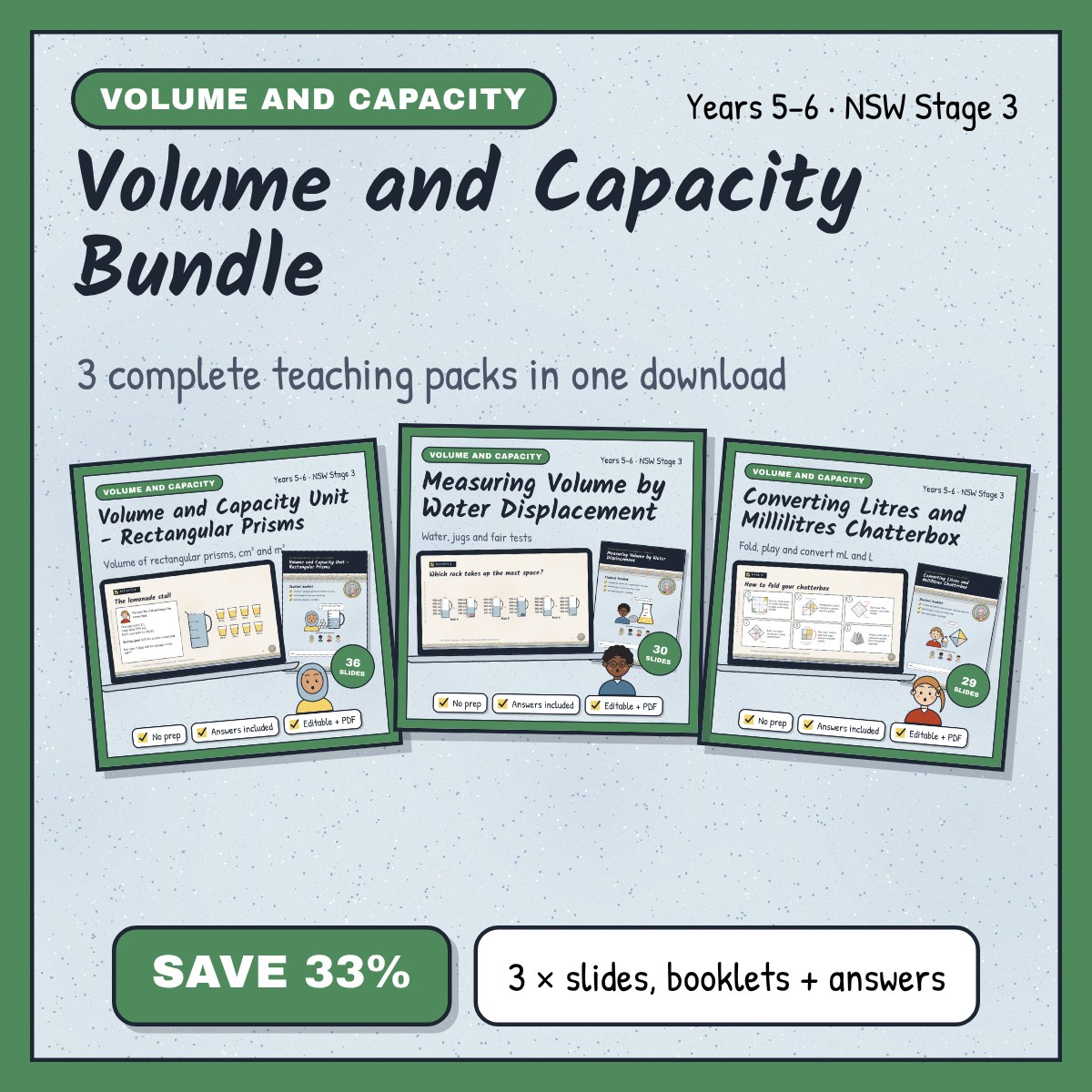
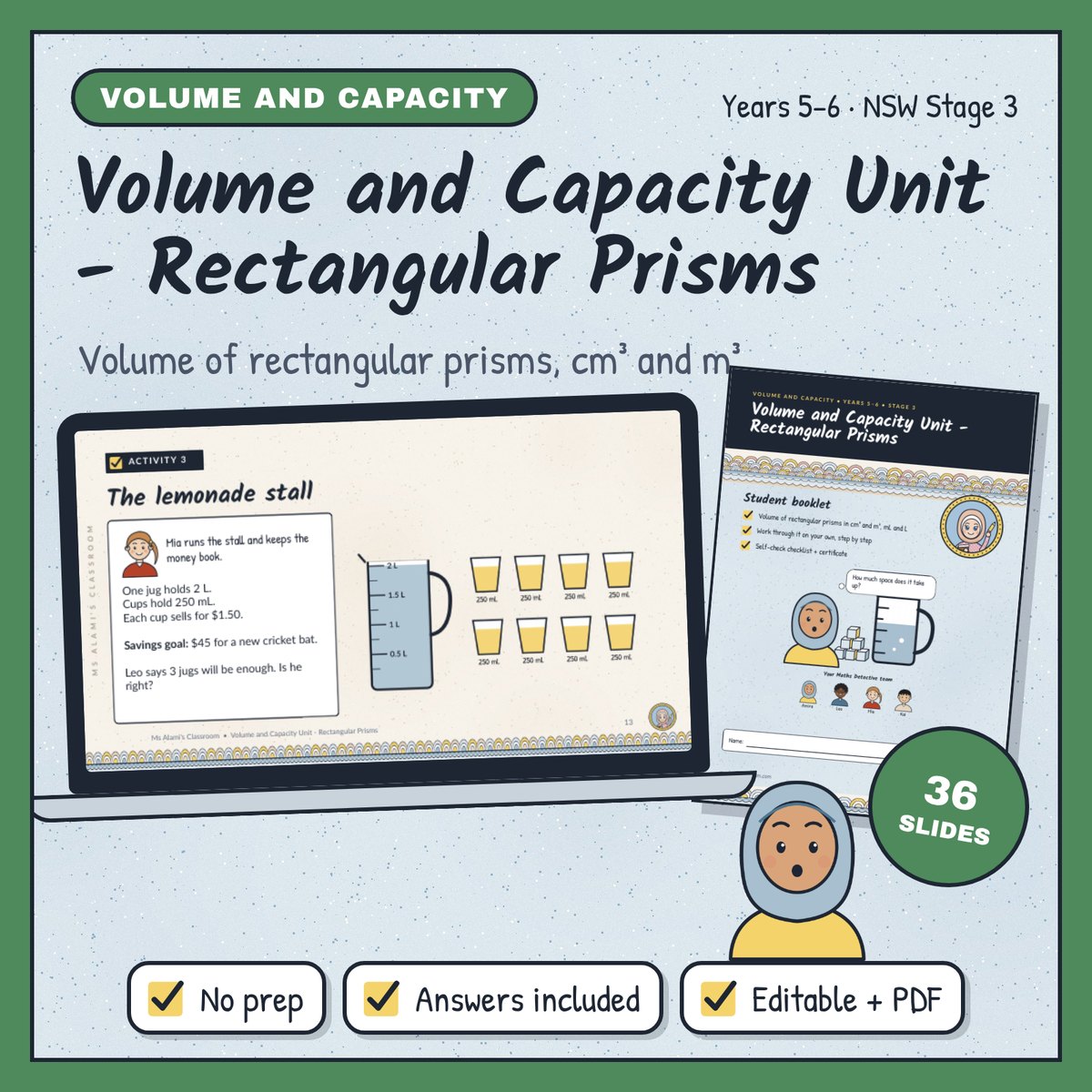
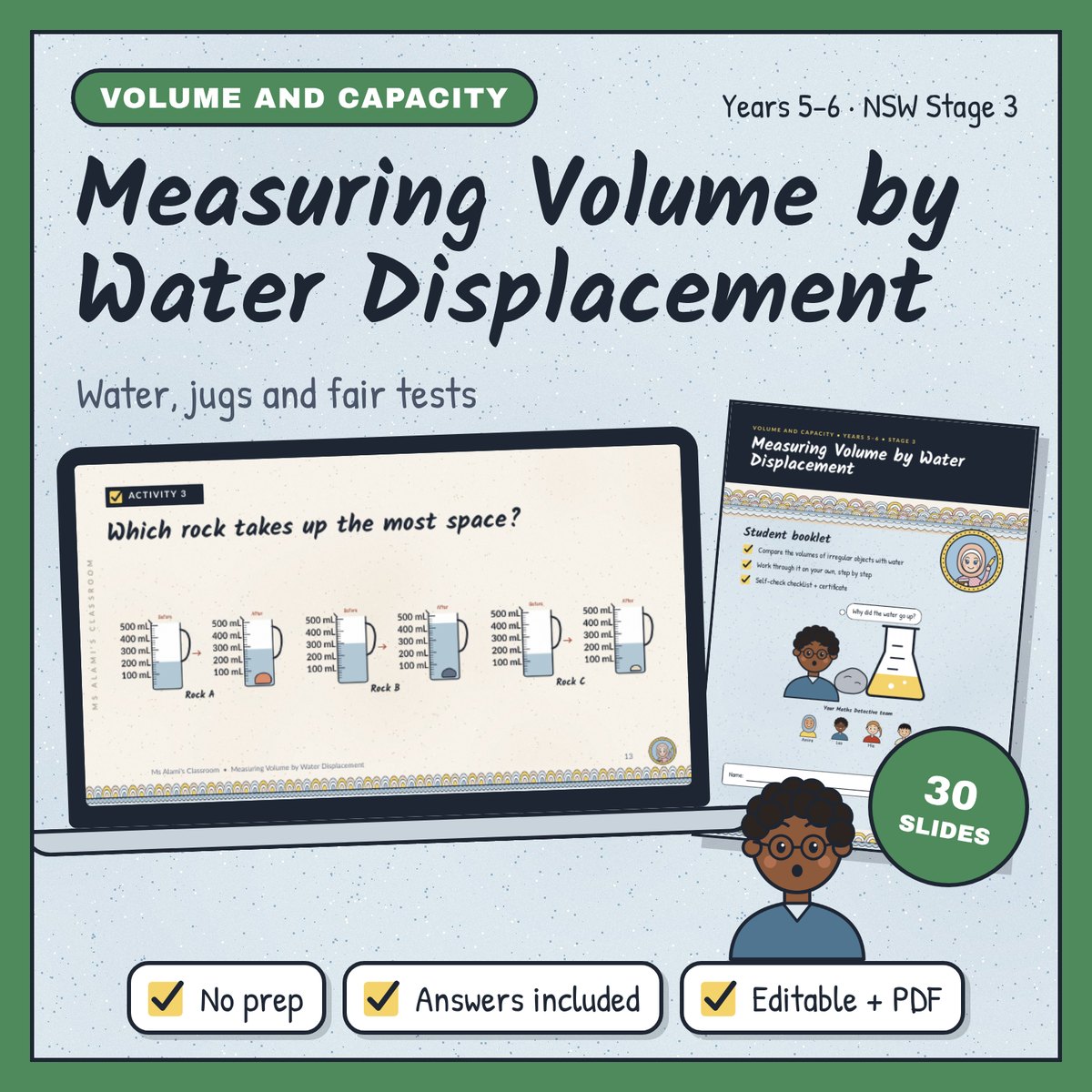
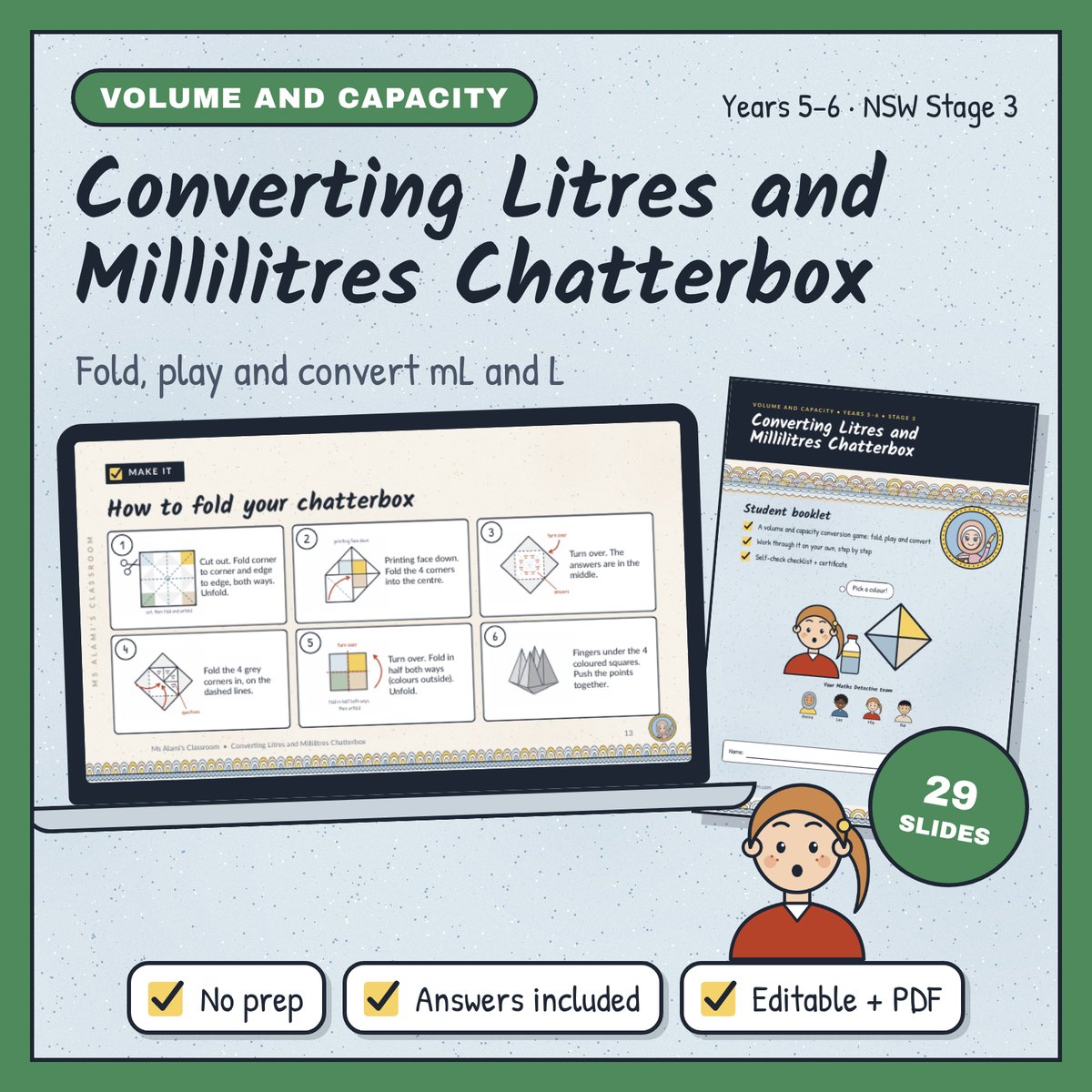
A full unit on the volume of rectangular prisms, a water displacement investigation and a litres and millilitres chatterbox build the ideas step by step, from cubic units to converting units of capacity.

Volume and Capacity

Prisms, cubic units, litres and millilitres

NSW Stage 3 · MA3-3DS-02

Volume and Capacity resources for Years 5–6

Search and filter in the shop

How to teach volume and capacity

Free teaching guides with examples, common mistakes and lesson ideas.

Questions teachers ask

What is the difference between volume and capacity?

Volume is how much space an object takes up, measured in cubic units such as cm³. Capacity is how much a container can hold, measured in millilitres and litres. 1 cm³ holds 1 mL.

How do you find the volume of a rectangular prism?

Multiply length × width × height. A box 5 cm long, 3 cm wide and 2 cm high has a volume of 30 cm³.

How many millilitres are in a litre?

1000 mL = 1 L. To change litres to millilitres multiply by 1000; to change millilitres to litres divide by 1000.

More Years 5–6 maths topics