
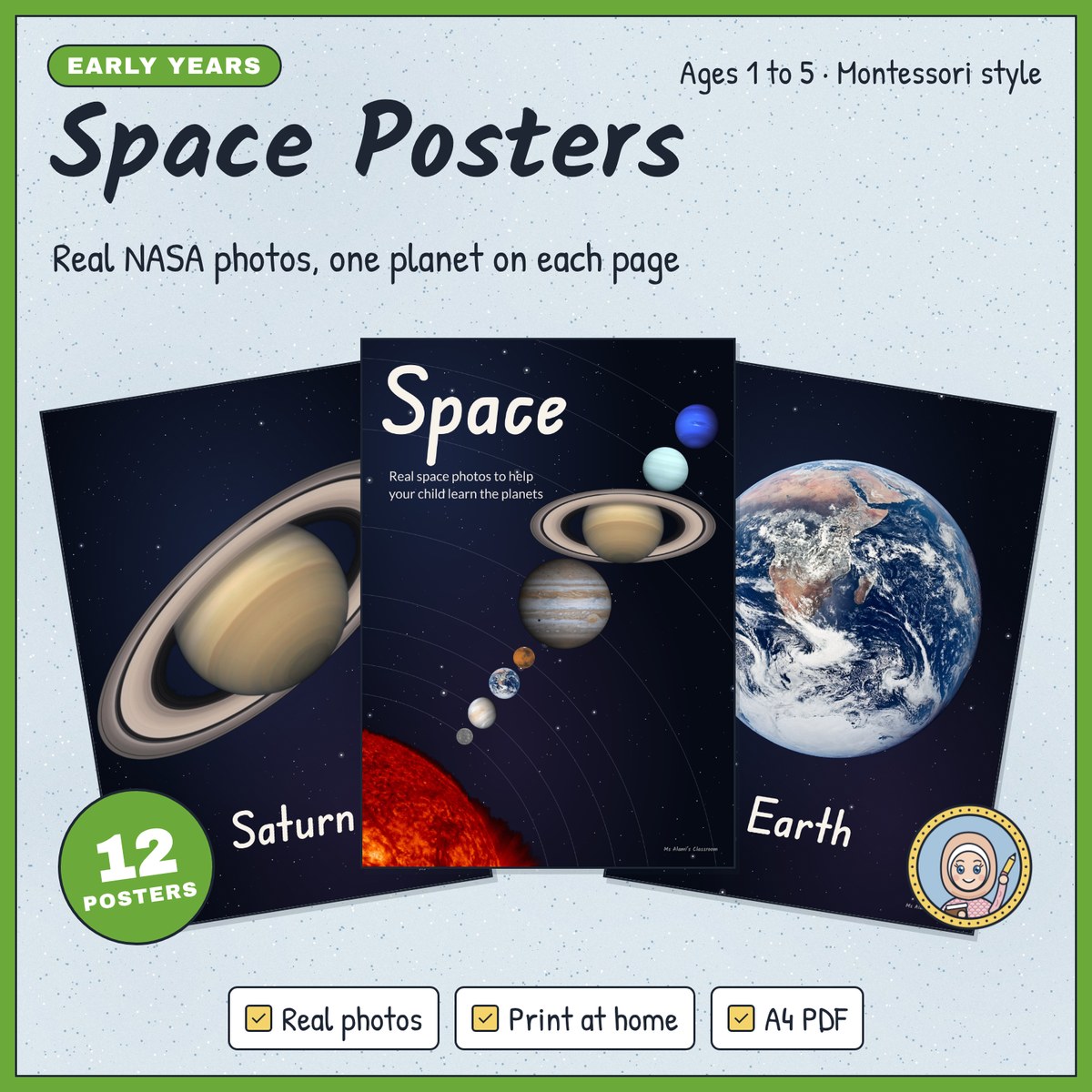
Little ones notice the sky long before we teach them anything about it: the Moon on the drive home, the Sun through the window. So when we set up our playroom, I gave space its own corner.
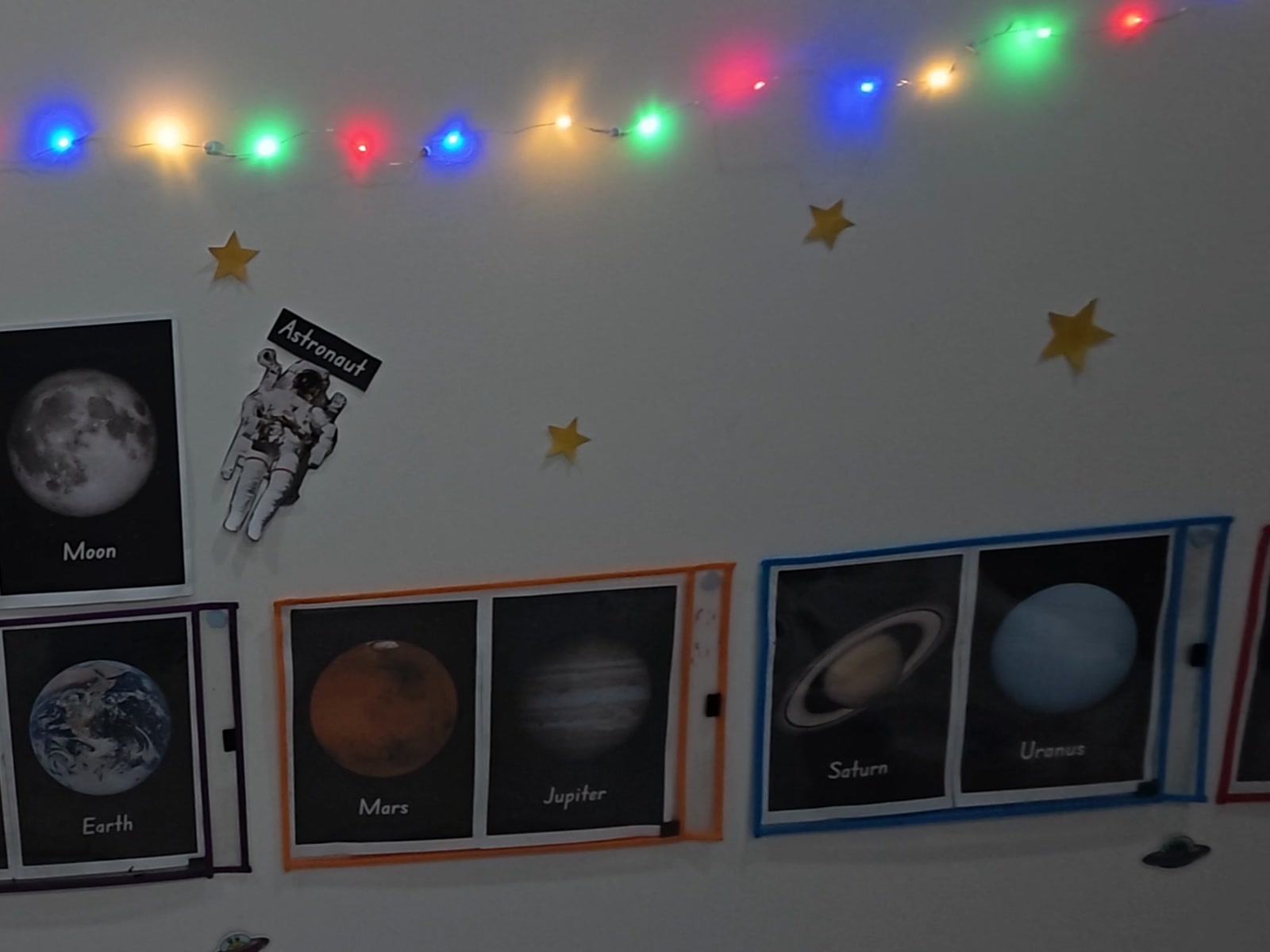
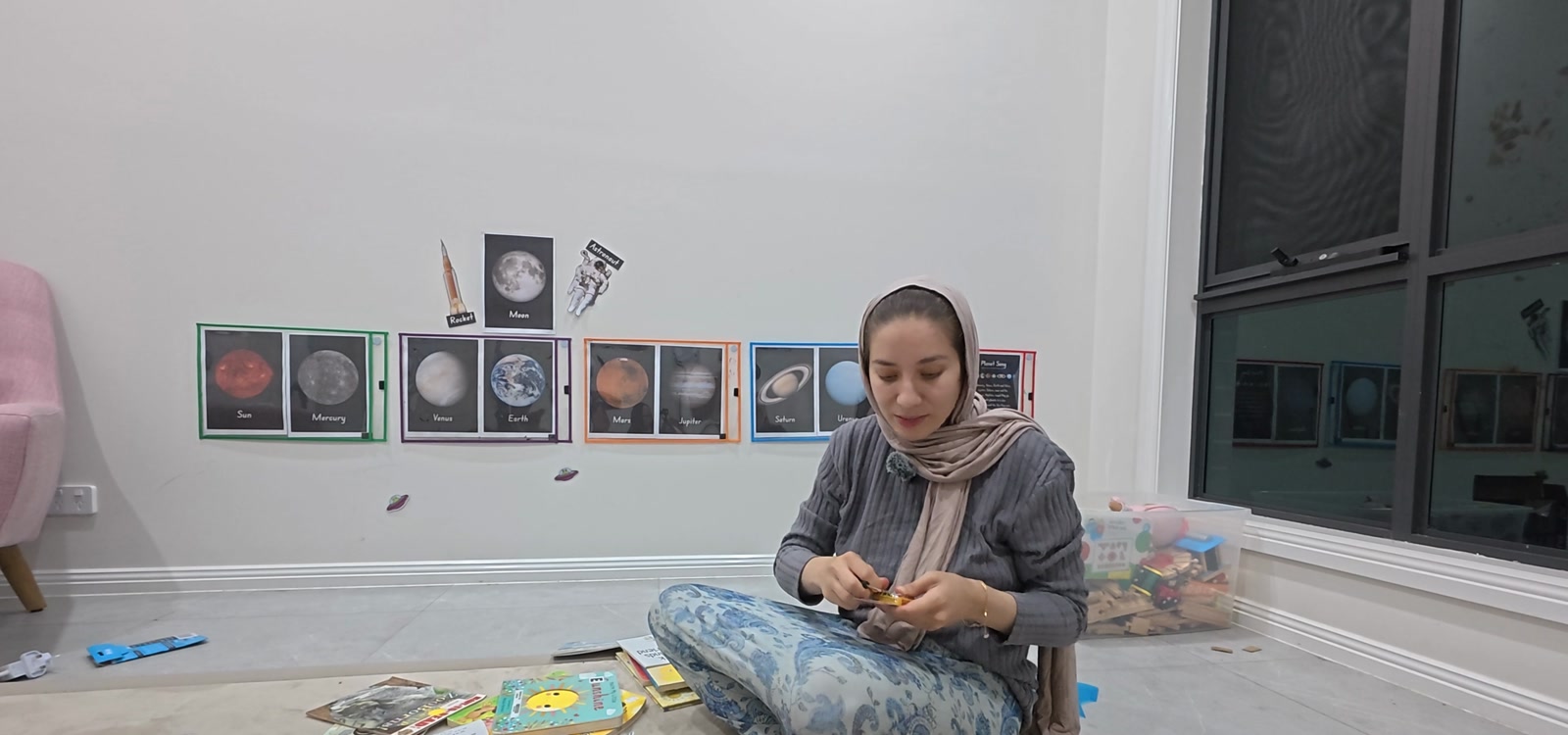
It cost very little. The planet posters went along the wall at her eye level, a $1 string of twinkle lights went above them, and we stuck paper stars around the edges. Now there's always something to point at and name together.
Why real photos matter
Most space pictures for children are cartoons: smiling planets, a yellow Moon with a face. They are cute, but they don't look like anything your child will see in the sky. A real photo of the Moon looks like the Moon out the window, so the word sticks to the real thing.
Little ones also do better with one thing to look at. A page crowded with facts, arrows and labels gives them nowhere to start. One big picture and one word is plenty at this age.
How to set up a space corner
- Put the posters low. Stick them at your child's eye level, not yours. If they can touch it, they will look at it.
- Protect them. Slide each poster into an A3 plastic sleeve, or laminate it. Little hands will pat, poke and occasionally lick the Moon.
- Start with three. The Sun, the Earth and the Moon are the parts of space your child already sees. Add the planets later, a few at a time.
- Add a little magic. A cheap string of twinkle lights and some paper stars turn a wall into a night sky.
- Sing it. We sing the planet song to the tune of Twinkle, Twinkle, Little Star and point to each planet as we go.
How to use the posters each day
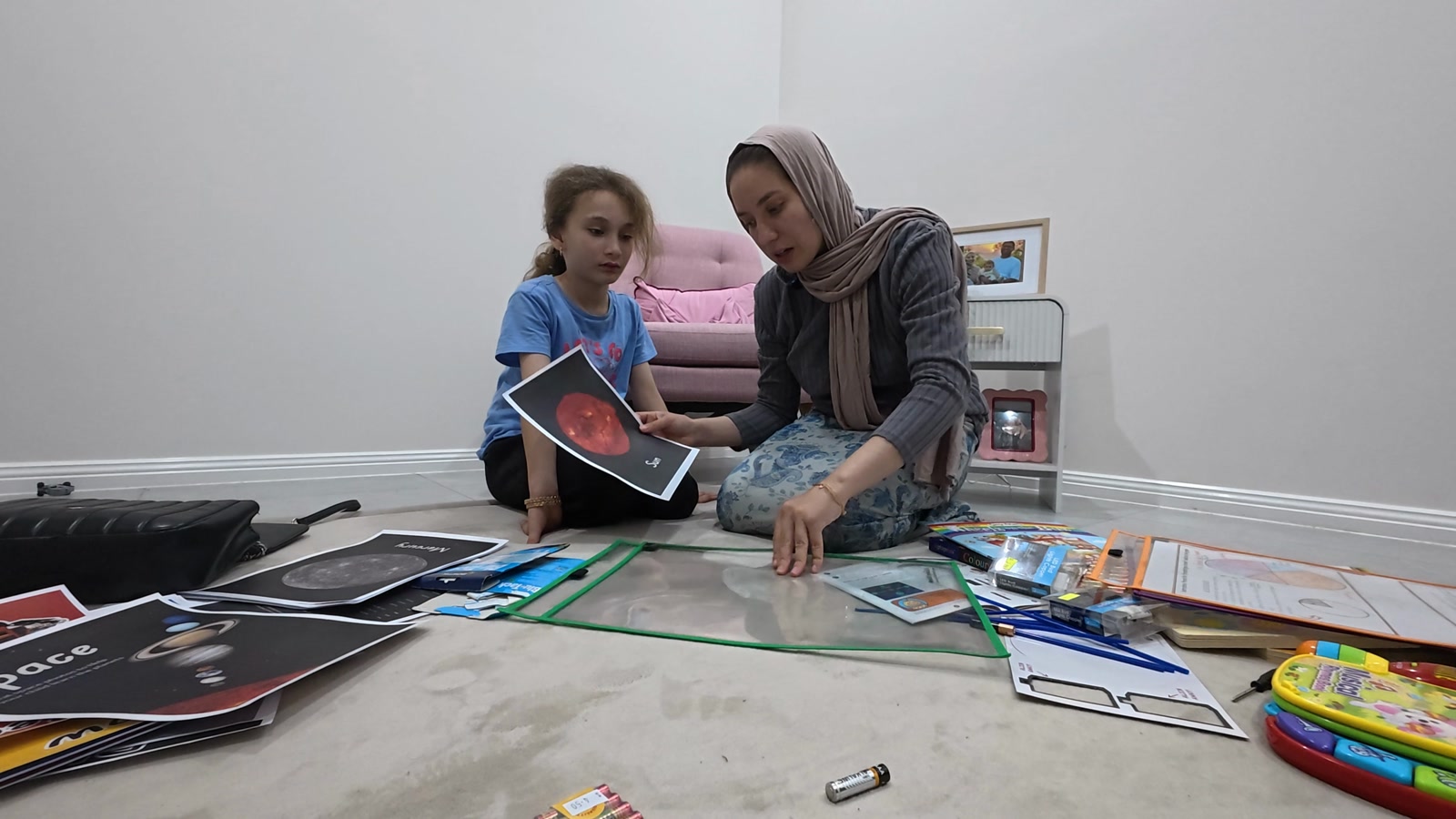
Keep it short. Point and say the name: "Moon." That's all. When the name is familiar, ask "Where's the Moon?" and let your child point. Much later, point and ask "What's this?"
Then take it outside. Look for the Moon in the evening, or notice the Sun on a warm afternoon (never look straight at it). Going from the poster to the real sky and back again is what makes it stick.
Using the posters
The free Sun, Earth, Moon and Stars posters are the easiest place to start. Each one has a real NASA photo and one name. The stars page has yellow stars in four sizes to cut out and stick around the posters.
When your child is ready for more, the full Space Posters set has 12 posters: the Sun, then all eight planets in order from the Sun, the Moon, a rocket and an astronaut. It also has the planet song with tips for singing it together, and the stars page. The names are written in the NSW Foundation style font, so the letters look like the ones your child will learn at school. The planets aren't to scale: each one fills the page so little eyes can see it.
Resources that go with this post
- FREE Sun, Earth, Moon and Stars Posters: real NASA photos of the three things your child sees in the sky, plus stars to cut out.
- Space Posters: the Sun, all eight planets, the Moon, a rocket and an astronaut, with the planet song.
More posts for little learners at home: Colours, Counting, Shapes and Letters and sounds.